
SPECC stands for Size, Perspective, Color and Light, and Composition. Decide these four things before you place the first pixel: how big the canvas and sprites are, which perspective you use, your palette and light source, and what story the scene tells.
When I started, I skipped planning. I'd pick a 1000 pixel canvas, draw for hours, and wonder why it didn't look like pixel art. Most of the redrawing I did came from decisions I never made at the start. SPECC is the method I wish I'd known then. It takes a few minutes and saves hours.
S: Size
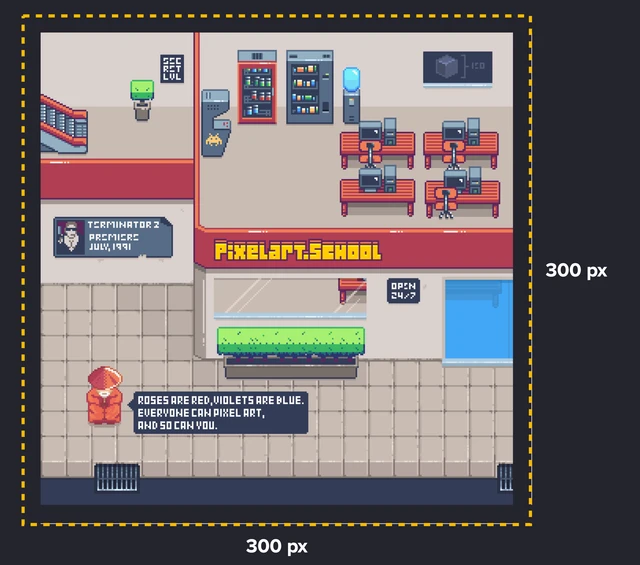
- Canvas: keep it at 500 to 600 pixels at most. Bigger, and the pixels get too small to read as pixel art. My RPG scene is 300 by 300.
- Sprites: pick a conventional size, 8, 16 or 32 pixels (64 or 128 if you're more advanced), and keep it the same across the whole artwork. Mixed sprite sizes look like they don't belong together.
See how sprite size changes the skills you need in how long it takes to learn pixel art.
P: Perspective
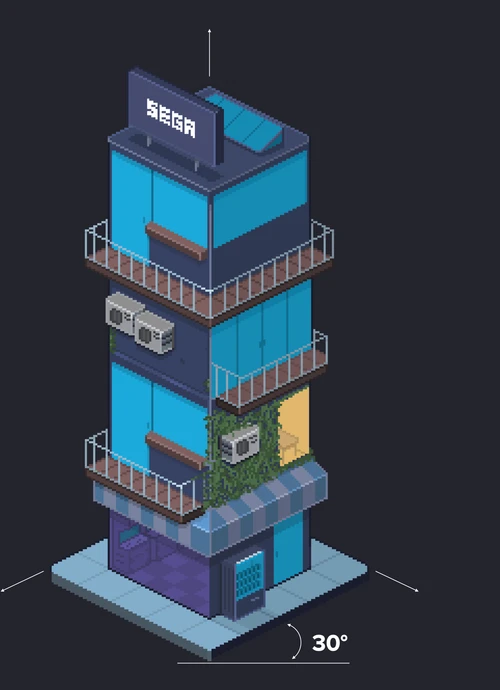
- Define one perspective when you plan the artwork, and keep it.
- Be careful with several perspectives in one artwork. If you mix, do it on purpose, like the hand and counters over an oblique room in my first-person scene.
All fifteen types, with diagrams, are in perspective in pixel art.
C: Color and light
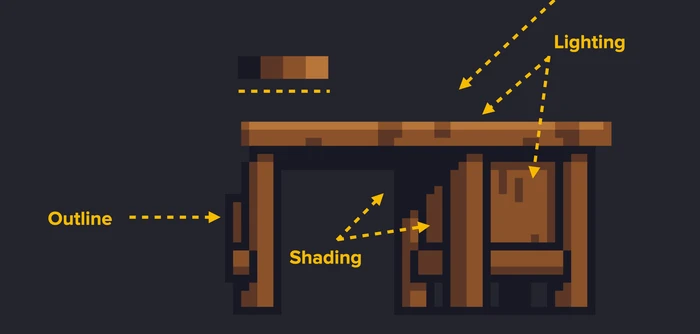
- Start with a limited palette and add colors as you go.
- Keep the outline and contour style the same everywhere.
- Define the light source and keep it consistent across the whole work.
- Material matters: porous materials reflect less light, hard and polished ones reflect more.
More in how to make a palette and shading and lighting.
C: Composition
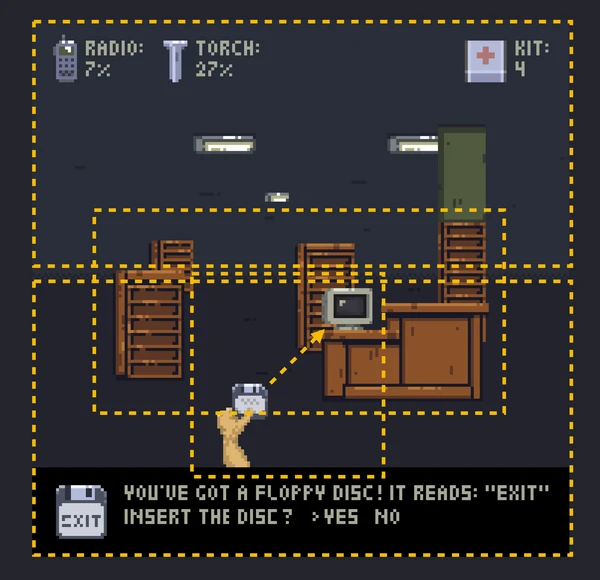
- What story does the artwork tell?
- What mood does it express?
- Where is the focus?
- How is it balanced?
Don't learn these by heart. They come back in every scene, and I walk through them on four mockups in pixel art composition.
The whole plan on one card
Before your next piece, write down four short answers:
- Canvas and sprite size.
- Perspective.
- Palette (start with 3 to 5 colors) and where the light comes from.
- One sentence of story, the mood, and where the eye should go first.
Then draw. You'll redraw much less.